How to number your invoices
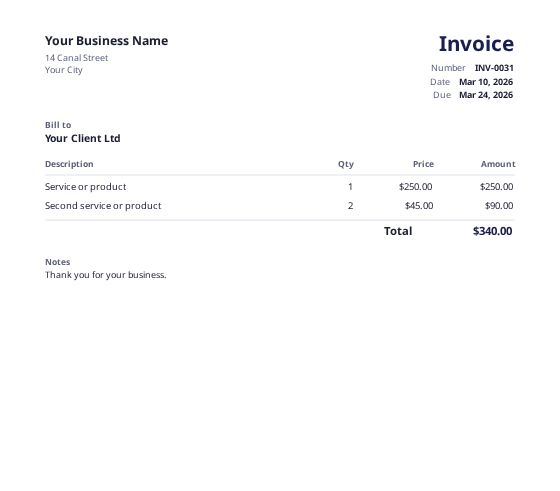
Give every invoice a unique number that goes up in order. That is the whole rule. The number lets you and your client refer to one invoice without confusion, and it shows your records are complete.
Simple formats that work
- INV-0001, INV-0002, INV-0003
- 2026-001, 2026-002, with the year at the front
- A short code for each client, such as ACME-0001, if you only have a few
Rules to keep
- Never use the same number twice
- Do not skip numbers on purpose
- Do not reuse the number of a cancelled invoice. Mark it as void instead, and keep it
Starting from a higher number
You can start at any number. If you are moving from another system, carry on from your last number so your records stay in one sequence. In Slipbook, set the next number in Settings.
Slipbook gives a document its number when you download, print, or share it. A draft you abandon does not use up a number, so gaps do not appear.
What to do with a mistake
If an invoice is wrong and you have already sent it, do not delete it and reuse the number. Mark it as void, make a new invoice with the next number, and tell the client which one to use. The gap in your numbers then has an explanation, which is what an accountant wants to see.
Quotes and receipts need their own numbers
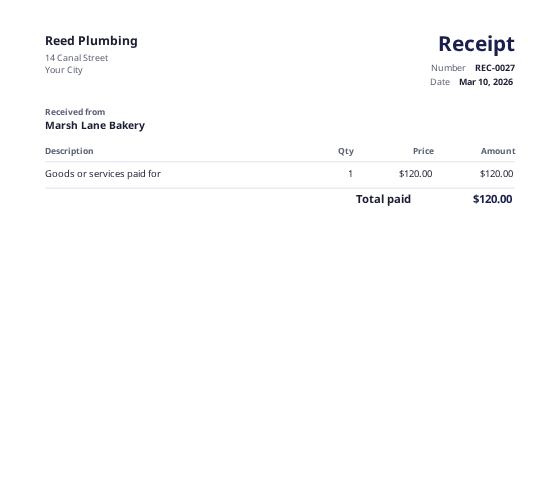
Keep a separate run of numbers for each kind of document, such as QUO-0012 and REC-0027. An invoice number then always means an invoice, and a quote that was never accepted leaves no gap in your invoices.
Questions
Can I start at 1?
Yes. Some people start higher so a new business looks established, but it makes no practical difference.
Do quotes and invoices share numbers?
They do not need to. Slipbook keeps a separate sequence for invoices, quotes, and receipts.
Checked on .